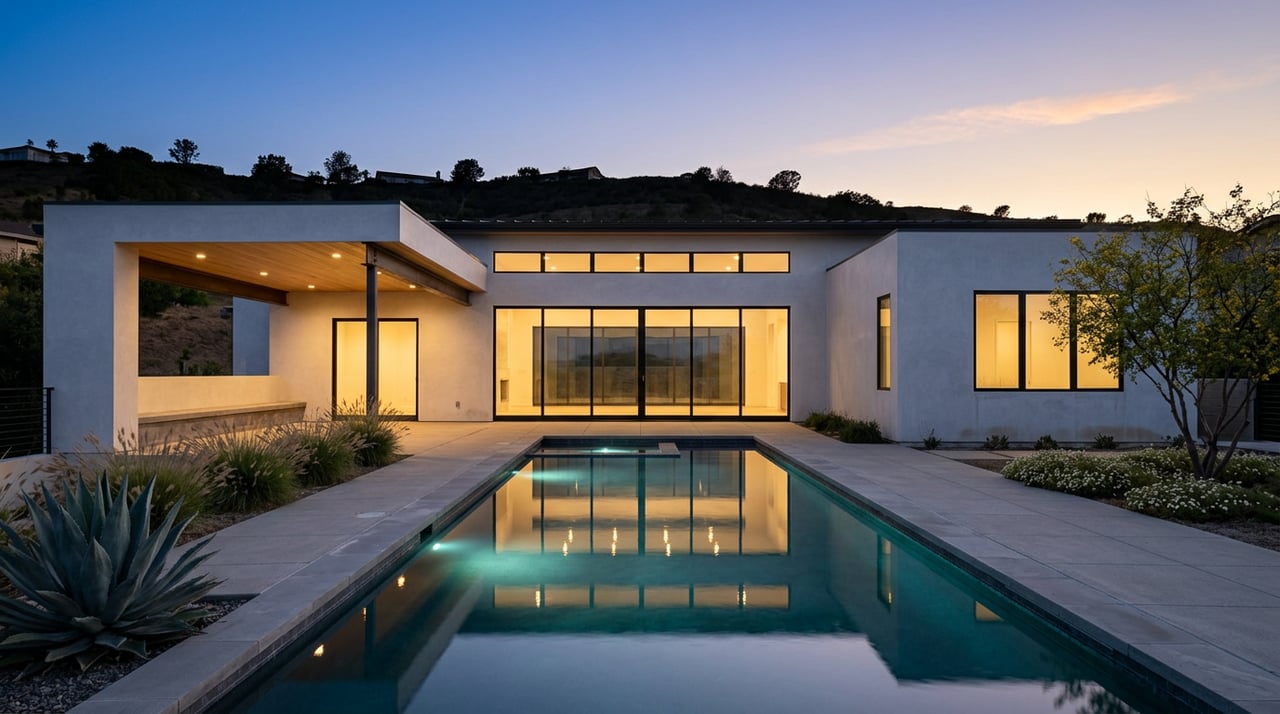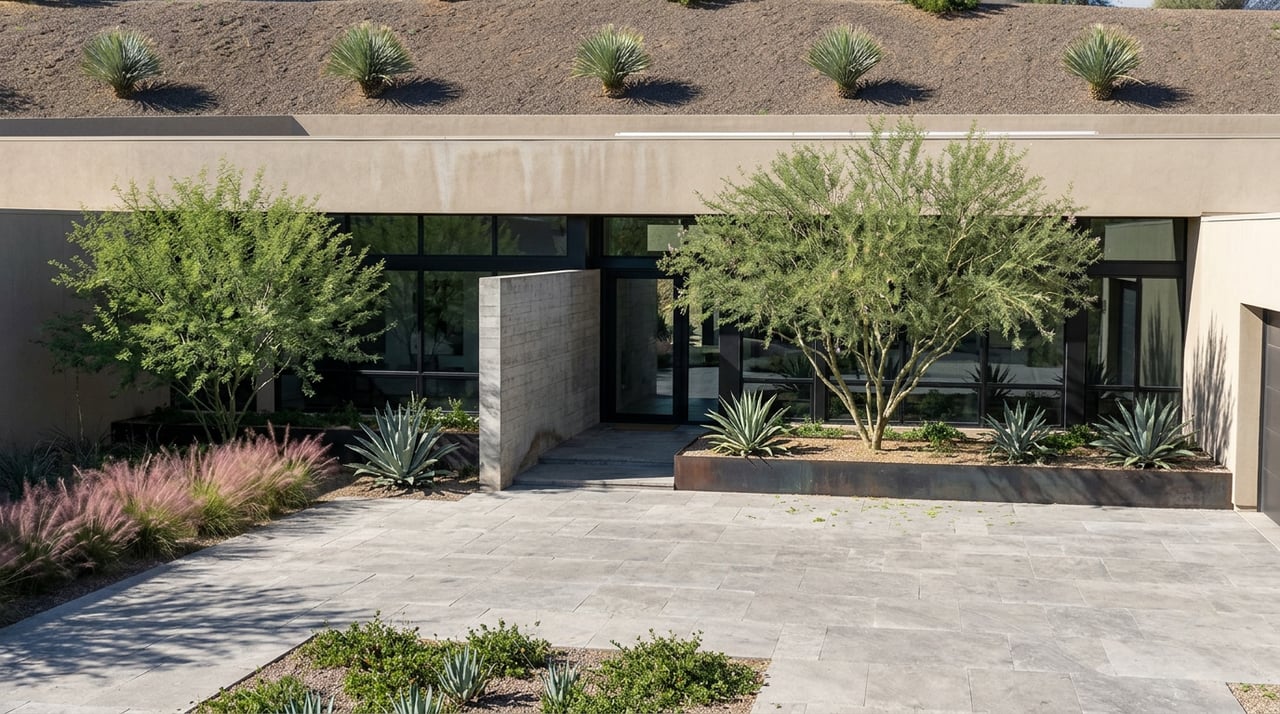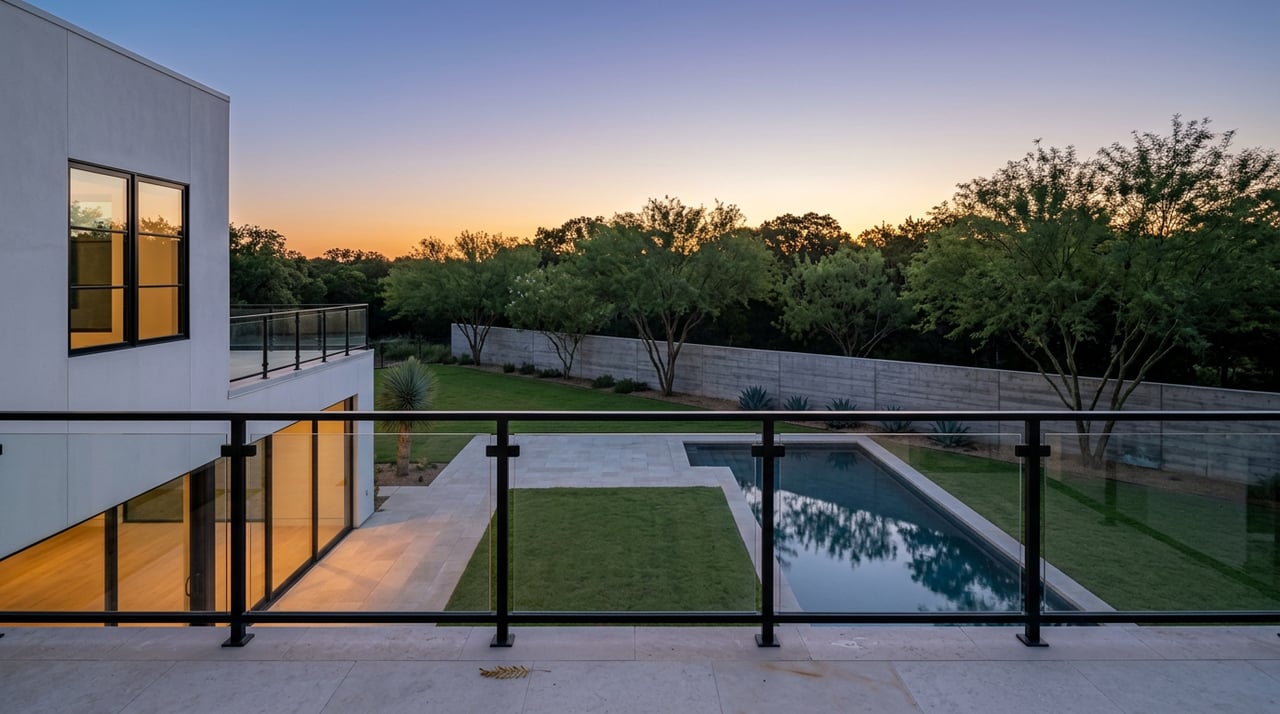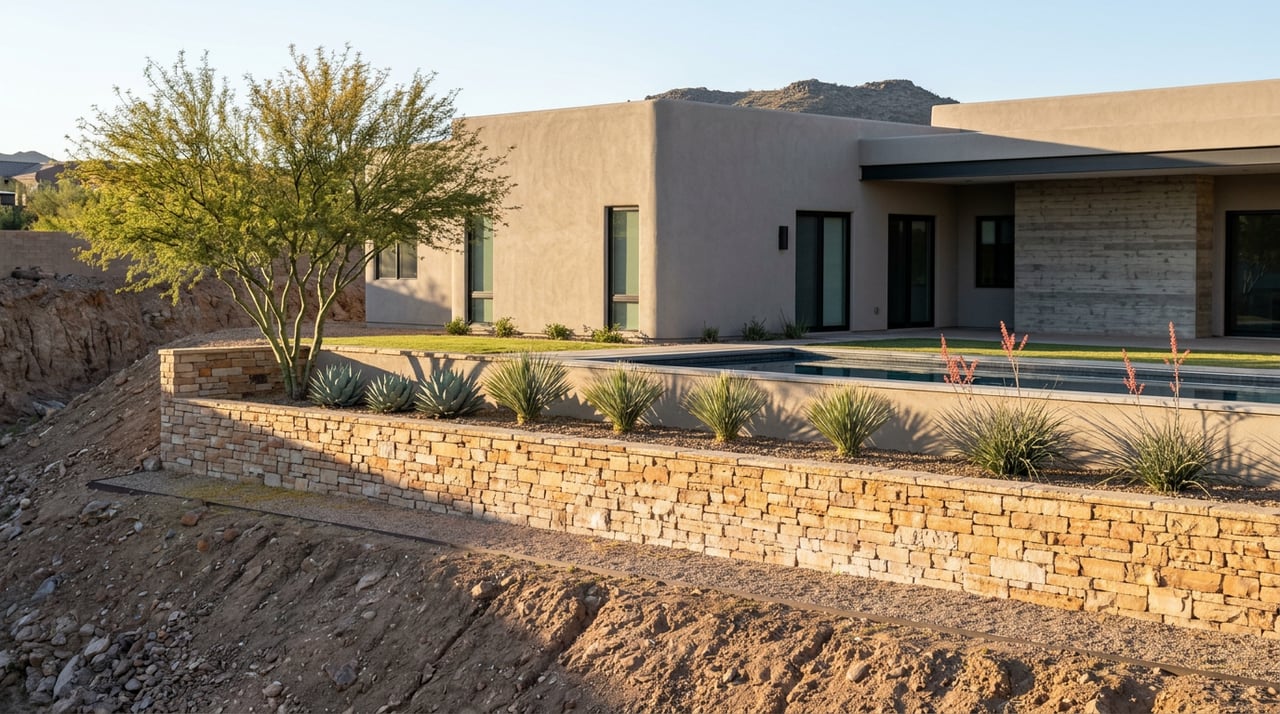
Mark Davis already owned a home in Ascaya when he went back for more land. Last year the Raiders owner paid $38.75 million for four adjacent lots at the top of the mountain, a purchase Ascaya's development team called the largest homesite acquisition ever recorded in the Las Vegas area. Aerial imagery shows the parcels sprawling across nearly 19 acres of mountainside. But when a spokesperson for the development team was asked how much of that land Davis could actually build on, the number came back much smaller: roughly 7.6 acres.
That gap between the acreage on paper and the acreage you can put a foundation on is the single most important thing to understand before buying land in Ascaya. It applied to the largest homesite purchase in Southern Nevada history, and it applies just as much to a buyer looking at a $1.4 million lot on a quieter street. Acreage is the number every listing leads with. Buildable envelope is the number that actually decides what you can build and what it will cost.
The Land Was Never Flat to Begin With
Ascaya exists because a Hong Kong-based developer, Henry Cheng, financed the blasting and grading of a stretch of the McCullough Range, moving an estimated 15 million cubic yards of material to carve more than 300 custom homesites into the mountainside. That origin story matters for buyers because it explains why two lots priced identically can behave so differently once an architect gets involved.
A lot's usable footprint depends on its approved building envelope, its maximum height allowance, the slope of the pad, the drainage plan, the retaining walls required to hold back a hillside, and how far the driveway has to travel to reach a buildable pad. A dramatic view lot with a steep drop often needs more excavation, more structural retaining, and more waterproofing than a lot with a gentler grade and a less photogenic view. Comparing two Ascaya parcels on price per acre alone can produce a completely wrong read on which one is the better deal.
Davis's purchase is the clearest illustration of that math because it happened at a scale nobody could ignore. He called the location "the crown jewel of Ascaya," and by every account the views justify it. But the deal still had to be measured in buildable acres, not total acres, before anyone could plan what goes on top of it.
What's Actually Left to Buy
Ascaya was always going to sell out eventually. The pace at which it has done so is worth knowing if you're comparing it to other Henderson hillside communities right now. Available lots fell from 142 in January 2024 to roughly 64 as of the first quarter of 2026, a decline of more than half in about two years.
That scarcity shows up differently depending on where a lot sits on the mountain. Here's how the first quarter of 2026 broke down by tier:
| Lot Tier | Price Range | Typical Time to Sell |
|---|---|---|
| Standard, lower elevation, partial view | $1.2M – $1.8M | Weeks to a few months |
| Premium, high elevation, full Strip frontage | Top of range, often $3M+ | Often under 30 days, multiple offers |
| Land-only, all tiers averaged (Q1 2026) | $2.1M average | 142 days average |
Notice the spread between the average price and the average days on market. A $2.1 million average price with 142 days on market sitting alongside premium lots that sell in under 30 days tells you the mountain isn't one market. It's several small ones, stacked by elevation and grading difficulty, and the buyers competing hardest are chasing the lots with the least grading work ahead of them, not simply the biggest lot numbers.
The Minimum Home Size Nobody Puts in the Renderings
Buying the land is only the first commitment. Ascaya's covenants set a minimum home size of 4,500 square feet on every street but one, and in practice most buyers build well past that floor. The average completed home in the community runs past 8,000 square feet. That minimum exists because Ascaya was designed around estate-scale architecture from the start, and it means the construction budget on top of the land purchase is rarely a modest one.
For a buyer comparing a $1.4 million standard lot to a $3 million premium lot, the land price difference is only part of the decision. The build cost on a steep, view-forward premium lot, with its added retaining and structural work, can close a gap that looked much wider on the listing sheet.
The Clock Starts After You Close, Not Before
Every custom home in Ascaya goes through the community's Architectural Review Committee before it can be permitted, and the full process from lot purchase to move-in typically runs 18 to 36 months. That timeline is worth planning around before you write an offer, not after. A buyer who needs to be in a home within a year is working against the grain of how this particular market operates. A buyer who's building for the long term, and who treats the ARC review as a design step rather than a delay, tends to have a smoother experience.
It also helps explain why a meaningful share of Ascaya transactions close in cash. All-cash buyers can move through the purchase side of the process in three to four weeks, which matters more in a market where the construction timeline afterward is already measured in years, not months.
How to Actually Compare Two Lots
If you're weighing land in Ascaya against another Henderson hillside community, or against two lots inside Ascaya itself, the acreage figure on the listing is the least useful number in the packet. Before comparing price tags, ask for:
- The approved building envelope and maximum height allowance, not just the total lot acreage
- A grading and retaining estimate from a builder familiar with Ascaya's terrain
- Driveway access distance and elevation change from the street to the buildable pad
- Whether the lot falls on the street with the standard 4,500 square foot minimum or the one exception
- A realistic ARC review and permitting timeline based on the lot's slope and site conditions
None of this shows up in a per-acre comparison, and all of it shows up in the final construction invoice.
FAQ
Does a bigger lot in Ascaya always mean more house? Not necessarily. A larger lot on steep terrain may yield less buildable pad than a smaller lot on a gentler grade, once retaining walls and drainage requirements are factored in.
Are there still lots available in Ascaya? As of the first quarter of 2026, roughly 64 of the community's original 313 homesites remained available, down from 142 in January 2024. Availability by tier and elevation changes as remaining lots sell.
How long does it take to build a custom home in Ascaya once you close on the land? Most buyers should plan for 18 to 36 months from closing to move-in, accounting for Architectural Review Committee approval, permitting, and the construction schedule itself.
The Bottom Line
Land in Ascaya is priced by the acre, but it isn't built by the acre. That distinction cost nothing to overlook when Mark Davis was buying the crown of the mountain outright, but for most buyers it's the difference between a lot that delivers what the price implied and one that quietly demands another six figures in grading before the first wall goes up. If you're comparing land here against another Henderson hillside community, or trying to figure out what a specific Ascaya parcel will actually let you build, the team at Elevate Real Estate Group can walk the buildable envelope with you before you make an offer, not after.